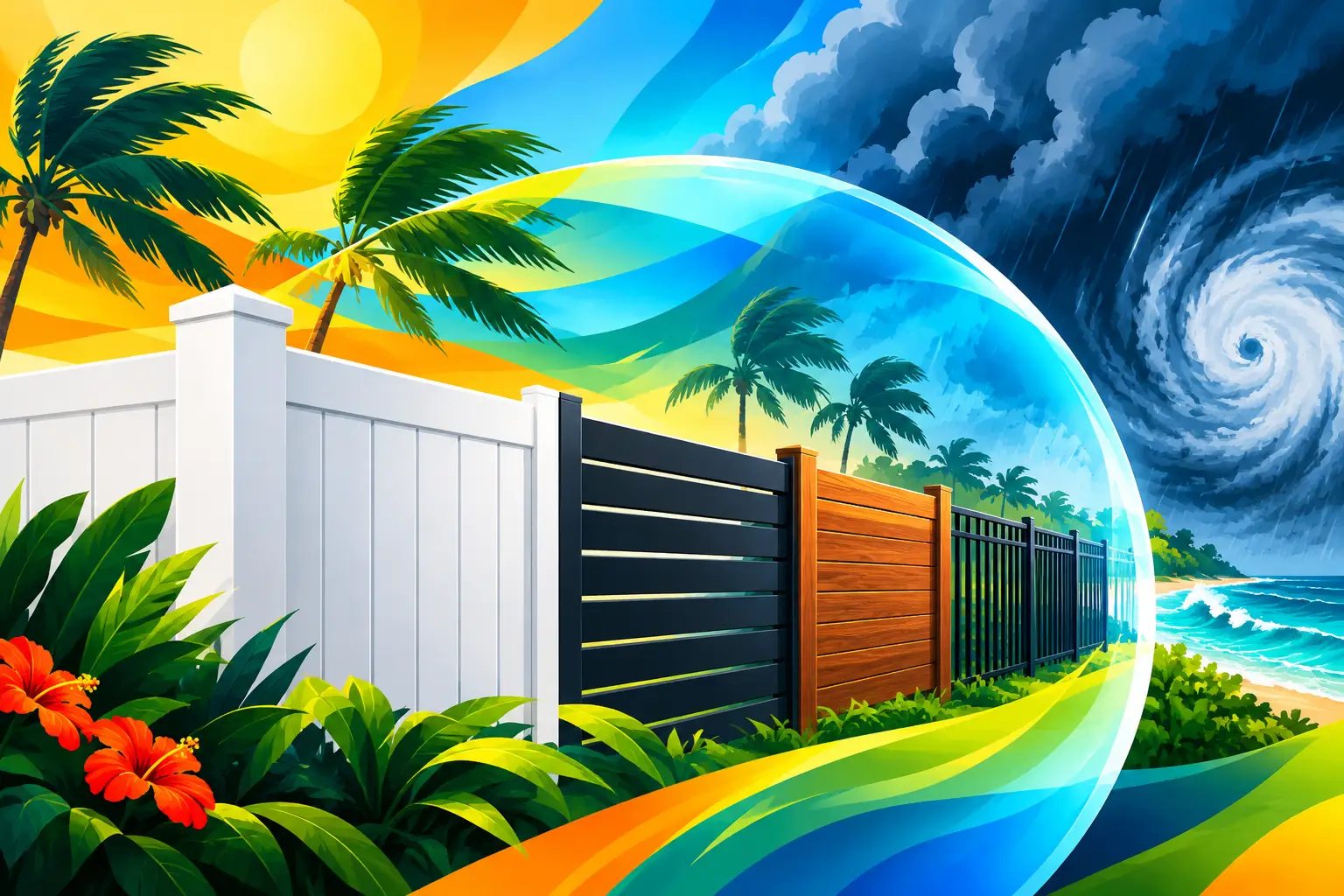
A fence that looks good on installation day can become a problem quickly in Hernando and Citrus counties if it was not selected and installed for local conditions. The best fence for Florida weather has to handle hard sun, frequent rain, humid air, sandy or shifting soil, and strong wind events without creating more maintenance than the property owner expected.
There is no single right material for every yard. A backyard privacy fence, a pool barrier, a livestock or pet enclosure, and a commercial security perimeter have different jobs to do. The right choice comes down to your property’s exposure, the level of privacy or security you need, local rules, and how much upkeep you are willing to take on.
What Florida Weather Does to a Fence
Florida’s climate puts pressure on both fence materials and the installation below ground. UV exposure can fade finishes and dry out natural wood. Heavy rain keeps surfaces damp longer, which can encourage rot, mildew, and corrosion when the wrong materials or hardware are used. Salt air can add another layer of concern for properties closer to the coast.
Wind deserves special attention. A solid privacy fence catches more wind than an open-style fence, so post depth, concrete, rail layout, gate construction, and the condition of the soil all matter. No fence is hurricane-proof, and no responsible contractor should promise otherwise. A properly planned installation can improve stability, but severe storms can still damage fences, trees, and structures.
Florida soil also varies from lot to lot. Sandy ground, wet areas, old fill, slopes, and root-heavy yards can affect how posts need to be set. That is why a site visit is more useful than selecting a fence based only on a photo or a per-foot price.
Best Fence for Florida Weather: Material by Material
Vinyl/PVC for low-maintenance privacy
Vinyl is often the strongest fit for homeowners who want a clean privacy fence without regular painting or staining. It does not rot like wood, and it will not rust. Quality vinyl fencing is built to stand up to moisture and everyday Florida sun better than many traditional wood products.
It is especially practical around backyards, patios, pet areas, and rental properties where low ongoing maintenance matters. White vinyl is a common choice, though available styles and colors can vary. Regular cleaning with mild soap and water is usually enough to remove dirt, algae, or sprinkler residue.
The trade-off is wind load. A tall, solid vinyl panel creates a broad surface for wind to push against. Proper post setting and a layout suited to the yard are not optional details. Vinyl can also crack when struck hard, so it may not be the best choice where equipment, vehicles, or heavy commercial activity are likely to contact the fence.
Aluminum for pools, views, and wet conditions
Aluminum fencing is a practical choice when you need a long-lasting barrier but do not want to block a view. It is commonly used for pool fencing, property definition, waterfront-adjacent yards, and homes with slopes because its panels can often follow changes in grade more cleanly than a rigid privacy system.
Aluminum does not rust in the way untreated steel can, making it well suited to Florida humidity and rain. Its open picket design also allows wind to pass through, which reduces the pressure placed on the fence during storms.
The limitation is privacy. Aluminum defines a boundary and provides a secure visual barrier for many applications, but it will not conceal a backyard from neighbors. It is also not designed to stop determined intruders in the same way a commercial security fence can. For pool areas, the gate, latch, spacing, and local code requirements are every bit as important as the fence material itself.
Wood for a traditional look with regular upkeep
Wood fencing remains popular because it has a natural appearance and can provide strong privacy at a range of price points. It can be built in several styles, repaired board by board in many cases, and adapted to unusual property lines.
But wood asks more of the owner in Florida. Sun, moisture, insects, and ground contact can shorten its service life if the material and installation are not handled correctly. Wood may need cleaning, sealing, staining, or painting over time. Boards can warp, split, or fade, and fasteners need to be selected with corrosion resistance in mind.
A wood fence can still be a good investment when the look is important and the owner is prepared for maintenance. The key is not treating it like a set-it-and-forget-it product. Ask how posts will be set, what lumber is being used, and how the design will manage drainage and wind exposure.
Chain-link for practical containment and security
Chain-link is one of the most functional fence options for pets, larger properties, side yards, commercial sites, and equipment enclosures. It is efficient, durable, and available in different heights and configurations. Vinyl-coated chain-link can provide a more finished appearance for residential settings, while heavier commercial-grade systems can support stronger security needs.
Because it is open, chain-link handles wind better than a solid privacy fence. Galvanized or coated materials help it hold up against moisture, but hardware quality still matters. Gates, terminal posts, tension wire, and fabric selection should match the use of the fence.
Chain-link will not provide privacy without added screening, and privacy slats add wind resistance that needs to be considered. For a business, it may be the right base system for a perimeter, but access points should be planned early. A drive gate that is too narrow, poorly placed, or undersized for the traffic it serves becomes an expensive daily inconvenience.
The Fence Design Matters as Much as the Material
The best material can still underperform when the layout and installation are wrong. That is particularly true in Florida, where wind and wet ground expose weak points quickly.
Start with the job the fence needs to do. A privacy fence around a family backyard has different design needs than an aluminum pool enclosure. A dog run needs the right height, gap spacing, and gate latch. A commercial enclosure may need heavier posts, a wider access gate, and a layout that accommodates service vehicles.
Gates deserve more attention than they usually get. They are moving parts, and they carry more stress than a standard panel. A walk gate should open and latch reliably. A drive gate should be wide enough for trucks, trailers, lawn equipment, or emergency access where applicable. On a sloped or uneven lot, gate placement can determine whether the finished fence works well or becomes a daily frustration.
Drainage and tree roots also need to be discussed before installation. Water moving across a yard can wash out soil near posts over time. Large roots can affect straight runs, post placement, and the final look of the fence. A good plan accounts for the actual conditions on site rather than forcing a standard layout onto every property.
Local Rules Can Change the Right Answer
Before choosing a style, confirm the requirements that apply to the property. Hernando and Citrus County projects may involve permits, zoning setbacks, easements, pool-barrier rules, HOA standards, or deed restrictions. Commercial properties can have additional requirements based on use and access needs.
This is not paperwork to leave until the installation crew arrives. A fence in the wrong location may need to be moved, even if it is already built. Property owners should also have underground utilities marked through Sunshine 811 before digging begins. A visible utility box, meter, or cable line does not tell you everything that may be underground.
A written estimate should spell out the material, approximate height, gate locations, demolition or removal if included, and the scope of work. If a site condition could affect cost or layout, it should be addressed before the schedule is set, not after posts are in the ground.
How to Choose Without Overbuying or Underbuilding
For most Florida homeowners, the decision becomes straightforward once the purpose is clear. Choose vinyl when privacy and low maintenance lead the list. Choose aluminum when pool safety, open views, and rust resistance matter most. Choose wood when you want a traditional appearance and accept periodic maintenance. Choose chain-link when containment, value, visibility, or commercial function is the priority.
Then look at your specific exposure. A wide-open yard may benefit from an open-style fence or a privacy design planned carefully for wind. A heavily shaded yard may require more routine cleaning, regardless of material. A coastal or high-moisture location makes corrosion-resistant components more valuable. If you are unsure, ask for the recommendation to be tied to your yard and intended use, not just to the contractor’s easiest product to sell.
Xtreme Fence of Florida approaches that decision through a scheduled site visit, written scope, permit and zoning review when needed, utility coordination, installation, and final walk-through. That process helps catch the details that do not show up in a quick phone quote.
A fence should make the property easier to enjoy and manage, not give you another weather-related repair project. Start with the conditions in your yard, be realistic about maintenance, and make sure the installation plan is built around the fence’s actual job.